




Table of Contents Show
Neuralink, a company founded by Elon Musk in 2016, is pioneering a new frontier in human-computer interaction: brain-computer interfaces (BCIs). By creating direct communication pathways between the human brain and external devices, Neuralink and others in the field are attempting to redefine what it means to think, feel, and interact with technology. What once sounded like science fiction – controlling devices with your mind, restoring mobility to the paralyzed, enhancing cognition – is now becoming an increasingly tangible reality.
In this article, we’ll take a deeper look at Neuralink’s groundbreaking innovations, the diverse applications of brain-computer interfaces, and the growing ethical concerns that accompany this powerful and sensitive technology.
Neuralink’s Innovations
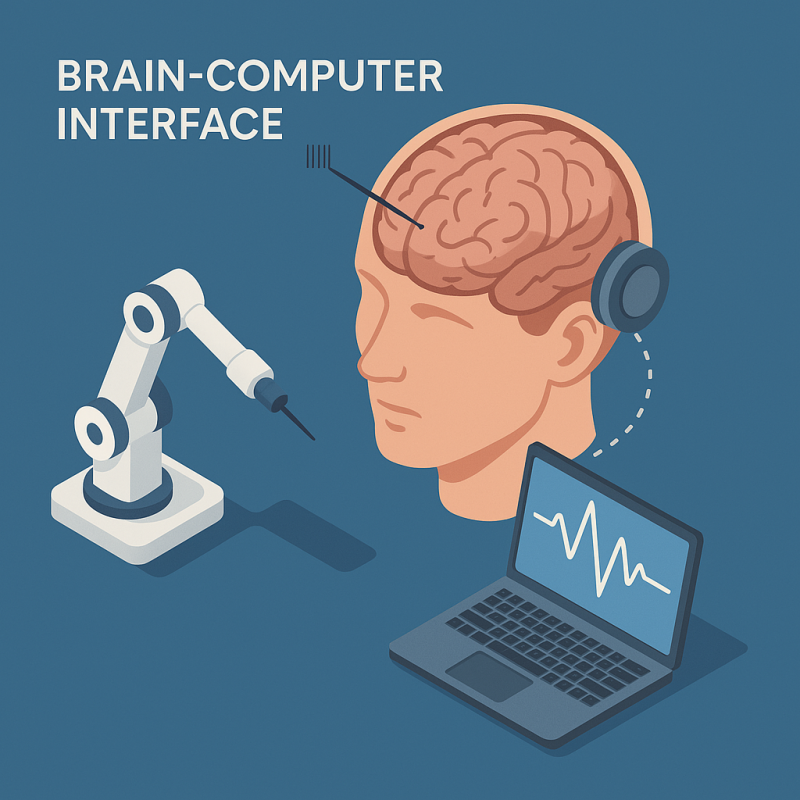
Neuralink’s primary objective is to create a high-bandwidth, minimally invasive interface capable of both reading from and writing to the brain. Unlike traditional electrode systems, which can be bulky or damaging to delicate brain tissue, Neuralink uses ultra-fine, flexible threads – thinner than a human hair – to interface with the brain’s neurons. These threads are embedded into the cerebral cortex and can detect tiny electrical signals generated by neurons.
The Link Device
At the heart of Neuralink’s system is “the Link,” a coin-sized implant that sits flush with the skull once inserted. This device is capable of processing brain signals and transmitting them wirelessly to external devices, such as smartphones, computers, or prosthetics. The current iteration can connect to hundreds of brain regions, recording signals at unprecedented resolution and speed.
Robotic Precision
Implanting these threads requires a level of precision beyond human capability. That’s where Neuralink’s neurosurgical robot comes into play. This machine, equipped with advanced imaging and AI guidance, can thread the ultra-thin electrodes into specific regions of the brain with remarkable accuracy – while avoiding blood vessels to minimize inflammation and damage. This automation could eventually make BCI surgeries safer, faster, and more scalable.
In January 2024, Neuralink received approval from the U.S. FDA to conduct its first human trials, marking a historic milestone not only for the company but for the BCI industry as a whole. According to Musk, the long-term goal is to achieve “symbiosis with AI,” but the short-term aim is focused on solving major neurological disorders.
Potential Applications of Brain-Computer Interfaces
Brain-computer interfaces offer immense potential across many domains – from helping patients regain lost abilities to unlocking new levels of human-machine interaction. Some of the most promising areas of application include:
1. Communication
Perhaps the most immediate and life-changing application of BCIs lies in restoring communication for individuals with paralysis, locked-in syndrome, or severe speech impairments. By decoding neural signals associated with speech or movement, BCIs can allow users to type, speak, or control devices using only their thoughts. In early demonstrations, Neuralink has shown a pig with a brain implant controlling its snout through neural activity and a monkey playing Pong with its mind.
Researchers are working on translating internal brain signals – those associated with imagined speech – into text or spoken output, offering a new lifeline to those who have lost their ability to speak.
2. Medical and Mental Health Treatment
In healthcare, BCIs could radically transform how we monitor, diagnose, and treat neurological conditions. For example, they could be used to:
| Condition | BCI Potential |
|---|---|
| Epilepsy | Detect seizures early and deliver real-time neural stimulation |
| Parkinson’s disease | Improve motor control through deep brain stimulation |
| Depression | Modulate dysfunctional brain circuits using targeted feedback |
| Chronic pain | Interrupt pain signaling in the brain |
| Alzheimer’s disease | Potential cognitive enhancement or memory recall assistance |
Some of these use cases build on existing technologies like deep brain stimulation, but BCIs promise a much more targeted and responsive approach. The Link could offer continuous monitoring and adaptive treatment, making therapies more precise and personalized.
3. Assistive Technologies
BCIs could open new doors for people with physical disabilities. From controlling a robotic arm or wheelchair to interacting with home automation systems, the ability to operate tools and systems using thought alone is incredibly empowering.
Prosthetics could also be revolutionized. By integrating BCIs directly into the control system, artificial limbs could respond more naturally to a user’s intentions. Unlike traditional interfaces that rely on muscle signals, a BCI reads the intention at the source – the brain – allowing for faster, more intuitive movement.
4. Human Enhancement
Perhaps the most controversial application of BCI technology lies in human enhancement. Could we someday improve our cognitive capacities – like memory, learning speed, or even emotional regulation – through neural implants?
While much of this remains speculative, early studies suggest that BCIs might one day support neuroplasticity-enhancing functions. Imagine downloading a new language or instantly recalling everything you’ve read – ambitious goals, but ones that could be explored with continued advancement.
According to a report by Wired, the possibility of brain augmentation is being taken seriously not only by startups like Neuralink but also by defense departments and academic institutions worldwide.
Ethical Considerations
As with any powerful technology, BCIs raise serious ethical, philosophical, and social questions. Before we integrate these tools into our lives, we need to consider the consequences.
Privacy and Security
Your thoughts are arguably the most private part of who you are. If BCIs allow for the collection and transmission of neural data, who owns that data? Can it be hacked? Could it be used for surveillance or manipulated without consent?
A worst-case scenario involves unauthorized access to neural signals, leading to the possibility of cognitive intrusion or even coercion. Cybersecurity in BCI design isn’t just a technical issue – it’s a human rights issue.
Fairness and Equity
If BCIs can offer enhanced memory or improved cognitive functions, will access be restricted to the wealthy? This could widen socioeconomic gaps and create a world where enhanced humans have a significant advantage over others.
The digital divide is already a concern with access to broadband and education; BCIs could make that gap even more severe unless policies ensure equitable access.
Autonomy and Informed Consent
Neurosurgery carries real risks, and brain interfaces aren’t yet foolproof. Individuals undergoing BCI procedures – especially vulnerable patients – must be fully informed about the possible risks, limitations, and side effects.
The use of BCIs in children, prisoners, or patients with cognitive impairments raises further questions about informed consent and potential exploitation.
Identity and Personhood
When the brain becomes an interface, what happens to our sense of self? If we can alter mood, cognition, or decision-making processes with a device, it challenges our understanding of autonomy, agency, and personal identity.
Future Prospects
Technological Advances on the Horizon
The field of BCI is advancing rapidly, and future innovations could include:
- Non-invasive BCIs: Technologies like EEG and fNIRS may one day offer high-resolution interfacing without surgery.
- Wireless and battery-free implants: Devices that require minimal maintenance.
- AI-powered decoding: Better algorithms for translating thought into action.
- Neural feedback loops: Systems that not only read but stimulate the brain to optimize performance in real time.
Academic research institutions and companies such as Synchron and Paradromics are also developing alternatives to Neuralink’s approach, expanding the ecosystem and pushing the boundaries of what’s possible.
Societal Transformation
If widely adopted, BCIs could redefine how we live, work, and connect. Imagine remote telepathy-style meetings, immersive VR experiences controlled by your mind, or job interviews conducted via direct neural interface. Education, gaming, therapy, and entertainment would all evolve drastically.
That said, widespread adoption requires thoughtful regulation. International ethical standards, legal frameworks, and interdisciplinary collaboration will be key to ensuring this technology benefits humanity rather than dividing or harming it.
Conclusion
Neuralink stands at the cutting edge of brain-computer interface technology, pushing the boundaries of how we can interact with machines – and each other – through thought alone. While their vision is ambitious, their early progress has captured the imagination of scientists, ethicists, and technologists alike.
The potential benefits are enormous: restored mobility, improved healthcare, expanded communication, and even enhanced intelligence. But these advances come with real risks – especially around privacy, fairness, and identity.
As the field matures, it will be essential to balance innovation with caution, enthusiasm with ethics, and ambition with equity. Neuralink may have sparked the conversation, but the future of BCIs will be shaped by all of us.
Whether that future is utopian or dystopian will depend not just on what we build, but how – and why – we build it.