



Table of Contents Show
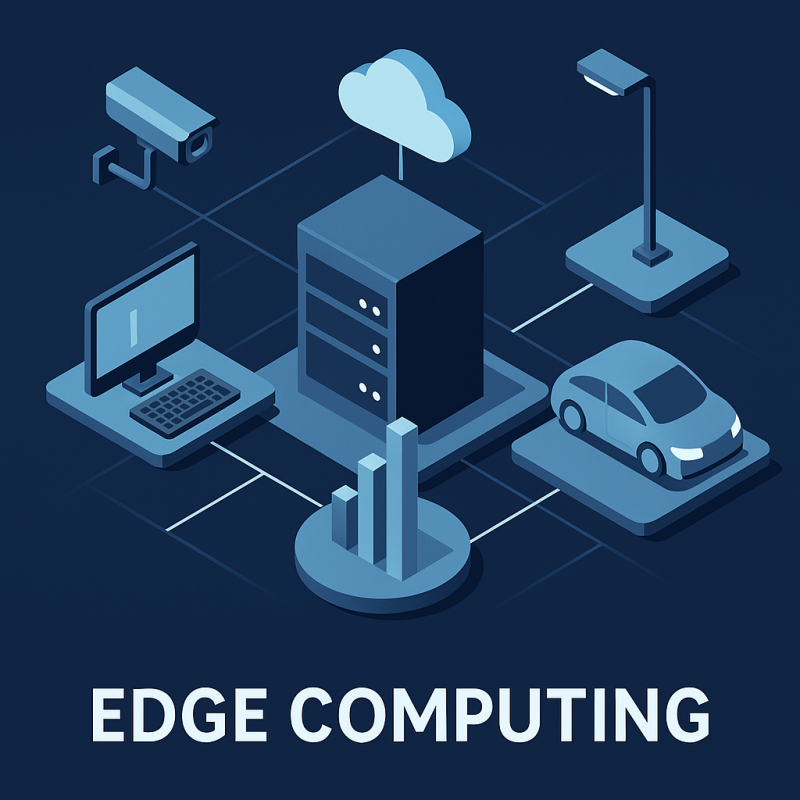
Edge computing is gaining serious momentum as one of the most transformative technologies in today’s digital landscape. It shifts data processing and storage from centralized cloud systems to locations closer to where the data is generated – often referred to as “the edge.” This approach drastically reduces latency, conserves bandwidth, and allows real-time data analysis and decision-making.
As our world becomes increasingly reliant on connected devices, from smart thermostats to self-driving cars, the traditional model of centralized cloud computing can’t always keep up. Edge computing is stepping in to fill that gap, offering a more agile, efficient, and scalable solution for our data-hungry age.
In this post, we’ll dive into why edge computing is such a big deal, break down its many benefits, explore key applications, and look ahead to its growing role in reshaping technology across industries.
The Core Benefits of Edge Computing
1. Reduced Latency
One of the biggest selling points of edge computing is its ability to minimize latency. In traditional cloud computing, data must travel from a user or device to a centralized server, get processed, and then return. This round trip can introduce delays – especially over long distances or under high network traffic.
Edge computing slashes that delay by processing data locally. For time-sensitive applications like self-driving cars, industrial robotics, or augmented reality (AR), even milliseconds can make a massive difference. Edge computing enables faster responses by eliminating the need for constant communication with a distant server.
2. Improved Operational Efficiency
Sending huge volumes of data back and forth to the cloud isn’t just slow – it’s expensive. Edge computing limits the need for such transmissions by processing much of the data locally and only sending essential insights to central servers.
This reduction in bandwidth usage results in lower costs, faster performance, and more efficient system operations. In scenarios like factory automation or remote environmental monitoring, edge computing ensures smoother, more autonomous functionality without constant reliance on a network connection.
3. Enhanced Security and Privacy
Transmitting sensitive data over a network creates multiple opportunities for breaches. Edge computing mitigates that risk by keeping more data on local devices or nodes, closer to where it’s created.
For industries like healthcare, finance, or defense, this can be a game-changer. Personal health records or financial information, for instance, can be analyzed locally on a secure edge device rather than being sent to the cloud. Additionally, local data handling allows for more nuanced access controls and compliance with data regulations like GDPR.
4. Better Scalability
Unlike centralized systems that can become overwhelmed as more devices connect, edge computing scales more naturally. Each new edge device brings its own processing power, reducing the strain on central infrastructure. This makes it ideal for growing systems like smart cities or global supply chains, where flexibility and decentralized scalability are key.
Real-World Applications of Edge Computing
Edge computing is not just a futuristic concept – it’s already making a real difference across various industries.
1. Internet of Things (IoT)
The IoT ecosystem is massive and growing rapidly, with billions of devices – from smart refrigerators to industrial sensors – generating constant streams of data. Cloud-based systems struggle to handle the volume and speed required by these devices.
Edge computing allows IoT systems to analyze and act on data locally. For instance, a smart thermostat can adjust heating instantly based on occupancy patterns, without needing to check in with the cloud. Similarly, factory machinery can detect maintenance issues in real time and take corrective action, reducing downtime.
2. Autonomous Vehicles
Autonomous vehicles are perhaps one of the most compelling use cases for edge computing. These vehicles must process vast amounts of sensor data (LIDAR, radar, cameras, GPS, etc.) to make split-second decisions.
Relying on cloud servers located miles away is simply too slow and unreliable. Instead, edge computing enables onboard processing so vehicles can quickly respond to dynamic driving conditions – whether it’s a pedestrian stepping into the road or a traffic light turning red.
3. Smart Cities
Edge computing is the backbone of smart cities, where data from traffic lights, security cameras, public transport, and environmental sensors must be processed rapidly to improve efficiency and safety.
For example, edge computing can help manage traffic flow in real time by analyzing congestion and adjusting signals accordingly. It can also power real-time alerts from surveillance cameras for emergency services, or help optimize energy usage in smart grids.
4. Healthcare
From wearable health monitors to hospital equipment, edge computing enables quicker and more reliable data analysis in healthcare. This allows real-time monitoring of vital signs, early detection of anomalies, and even remote diagnostics.
In critical care situations, this speed can be the difference between life and death. Moreover, processing data at the edge helps protect patient privacy by reducing the amount of sensitive information sent to the cloud.
5. Retail and Customer Experience
Retailers are using edge computing to personalize customer experiences, manage inventory, and optimize store layouts. Smart shelves, for example, can detect when items are low and send alerts to staff in real time.
Edge-enabled systems can also offer real-time analytics on customer behavior, helping retailers adjust promotions or product placements on the fly, without having to send data back to a central database.
Why It’s More Than Just a Trend
Powering Next-Gen Innovations
Edge computing isn’t just improving what we already do – it’s enabling entirely new possibilities. Technologies like AR/VR, real-time gaming, and telemedicine require instant processing, which only edge computing can reliably deliver.
In manufacturing, predictive maintenance powered by edge AI can foresee machine failures before they happen. In agriculture, edge devices can automate irrigation systems based on real-time soil and weather conditions.
Overcoming Cloud Limitations
Cloud computing has served us well, but it wasn’t built for the kind of scale and speed the modern digital world demands. As the volume of data skyrockets, cloud servers become bottlenecks. Edge computing lightens that load by acting as the first line of processing, pushing only essential data upstream.
This hybrid model – edge plus cloud – offers the best of both worlds. The edge handles urgent, local processing, while the cloud provides storage and broader analytics.
More Resilient Systems
Edge computing also enhances system resilience. In a fully cloud-dependent model, any connectivity issue can halt operations. Edge systems can continue working independently even if the internet goes down – a crucial advantage for mission-critical operations like remote mining, space exploration, or rural healthcare.
Future Prospects of Edge Computing
Technological Advancements on the Horizon
The hardware behind edge computing – microprocessors, sensors, and embedded systems – is becoming more powerful and energy-efficient. At the same time, 5G networks are providing the low-latency, high-bandwidth connectivity that edge computing thrives on.
We’re also seeing major investment in edge computing platforms and software. Companies like Amazon Web Services (AWS), Microsoft Azure, and Google Cloud are offering edge solutions, while startups are innovating in areas like edge AI and edge orchestration.
For an in-depth look at industry growth, check out TechCrunch’s article on how edge computing is reshaping cloud infrastructure:
TechCrunch: Why edge computing is the future of the cloud
Industry-Wide Disruption
According to Gartner, by 2025, 75% of enterprise-generated data will be created and processed outside a traditional centralized data center or cloud. That’s a seismic shift in how we think about computing architecture.
Sectors like manufacturing, logistics, healthcare, agriculture, and energy will see significant transformations, driven by edge deployments that provide greater autonomy, intelligence, and speed.
Environmental Considerations
Processing data locally can reduce the energy required to transmit and store information in massive data centers, making edge computing a potentially greener option. With energy efficiency and sustainability gaining priority, this could be a powerful argument in favor of edge adoption.
For more on this angle, see Wired’s excellent deep dive:
Wired: How edge computing is driving a greener internet
Conclusion
Edge computing is not just another buzzword – it’s a foundational shift in how we process and act on data. It’s about speed, efficiency, privacy, and innovation. By bringing computational power closer to where it’s needed, edge computing enables a new generation of responsive, intelligent, and scalable systems.
From enabling smart cities and autonomous vehicles to enhancing healthcare and reducing cloud overload, the applications are broad and growing fast. As technology continues to evolve and the need for real-time data processing becomes non-negotiable, edge computing is set to become an indispensable part of our digital ecosystem.
If you’re in tech, logistics, healthcare, or any data-heavy industry, it’s time to start thinking seriously about edge computing. The future isn’t just in the cloud – it’s at the edge.